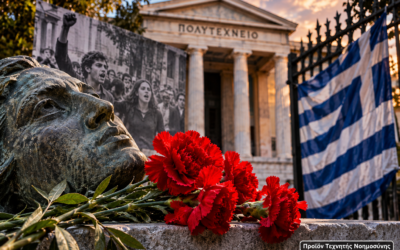
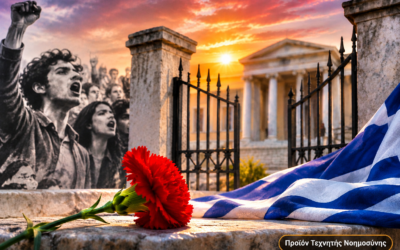
In Mati, 104 people were burned to death. Entire families were trapped in the flames, people ran to the sea to save themselves, and children were lost waiting for an organized state that never arrived in time.
Eight years have passed. It took until June 2025 for four former officials to be sent to prison, with a maximum sentence of five years. Ten people were found guilty, but for the remaining six, the sentences were commuted to fines. Can this development be called Justice proportionate to the loss of 104 people? Can five years be measured against 104 lives and the lifelong pain of their families?
On February 28, 2023, two trains collided on the same track in Tempe. Fifty-seven people, most of them young people, never returned to their families. Three years later, the big trial is still ongoing, with dozens of defendants and open questions about official, administrative and political responsibilities.
We cannot say that “nothing happened,” because the legal process has begun. However, we can ask why it takes so many years to hold people accountable. Why do families have to become investigators, search for evidence, and fight every day for what should be a self-evident obligation of the state?
On May 5, 2010, unknown persons set fire to the Marfin branch on Stadiou Street, while employees were inside. Angeliki Papathanasopoulou, 32 years old and pregnant, Paraskevi Zoulias, 35 years old, and Epaminondas Tsakalis, 36 years old, were trapped and died from the smoke and fumes.
Sixteen years later, in July 2026, two men were arrested, and an international warrant was issued for one woman. The arrests are a significant development, but they are not yet a conviction. It took sixteen full years for the investigation to reach this point. Sixteen years of waiting for the families of the victims, and sixteen years of society wondering whether those responsible would ever be held accountable.
Mati, Tempi, Marfin. Different tragedies, with different causes and different legal responsibilities. They are united, however, by the same tormenting feeling: that in Greece, human life costs little and Justice arrives slowly, when it arrives.
At the same time, everyday life is becoming increasingly difficult. The prices of food, energy and housing are exhausting households. Wages are often not enough to last the whole month. Young people are working without being able to own a house or start a family. Pensioners are forced to choose between their medicines and their bills.
The data do not allow us to consider this anxiety excessive. According to Eurostat, in 2025 27,5% of the population of Greece was at risk of poverty or social exclusion, the second highest rate in the European Union. ELSTAT recorded a risk of poverty for 19,6% of the population, while severe material and social deprivation increased.
The middle class, which for decades has supported the economy and social cohesion, is suffocating. Small businesses are struggling with expenses, workers with punctuality and families with the cost of housing. At the same time, those with financial power are gaining even greater access to real estate, investments and political influence.
It's not bad to create wealth. The problem begins when wealth is concentrated at the top, while insecurity is shared among everyone else. When growth shows up in the numbers but doesn't make it to the family table, then something is wrong.
The most worrying thing, however, is not just the poverty or the delayed justice. It is that we have become accustomed to it. Every tragedy shocks us for a few days. Promises, televised debates and statements of support follow. Then a new piece of news comes and the previous wound remains open.
Where are we going?
We are moving towards a society where citizens cease to believe that effort, truth and justice matter. And when a people lose their trust in institutions, they not only lose their hope. They lose the power to plan their future.
Greece does not need any more fruitless memorial ceremonies. It needs prevention, accountability and an independent judiciary that does not measure time differently for the powerful and differently for the ordinary citizen.
We are not asking for revenge. We are asking for a country where the dead do not become numbers, families do not struggle alone, and poverty is not presented as a normal state.
Because if we continue to get used to everything, in the end there will be nothing left that causes us either anger or shame.
Sources: Eye – eight years later, trial of the Tempi, arrests for Marfin, Eurostat – poverty and social exclusion.
photo Frantisek_Krejci, https://pixabay.com