The IEG event is important for gastronomic culture & the promotion of traditional products through Greek cuisine
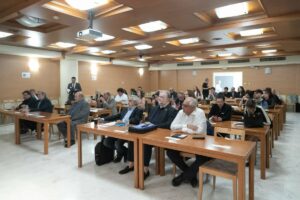
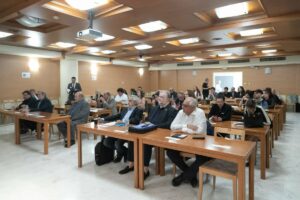
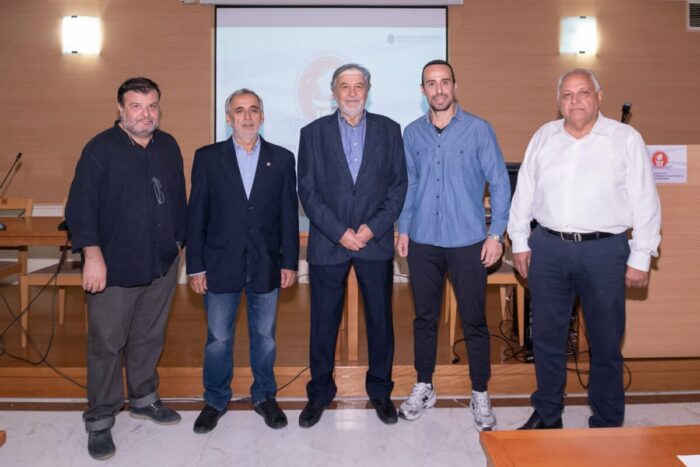
With great success, interesting presentations, participation of institutions, representatives of organizations, food & beverage businesses, producers, other gastronomy professionals and the public, the evening entitled "Gastronomic Culture & Promotion of Traditional Products, through Greek Traditional Cuisine", organized by the Institute of Greek Food Culture and Gastronomy (I.E.G.) in collaboration with the Department of Dietetics - Nutrition Science of Harokopio University, was held. The I.E.G. is a non-profit scientific and cultural organization, founded in 2014 with the aim of studying, researching, preserving and promoting the Greek nutritional and gastronomic heritage and mapping Greek cuisine. Distinguished representatives from the academic, technocratic, gastronomic and commercial sectors are active within its ranks.
The event opened with a greeting delivered by the Secretary General of the Ministry of Rural Development & Food (MARDF), Spyros Protopsaltis, who emphasized "the close relationship between Greek production and gastronomy and the identity of our products", while, as he stated, "at the MARDF we support this connection in practice, with tools for processing, standardization, the promotion of Greek raw materials and the strengthening of extroversion. The quality, origin and strong identity of Greek products are important advantages, which we must exploit even more".
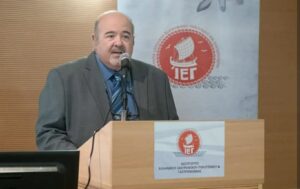
The Secretary General of the IEG and Director of Publications of FORUM SA Thanasis Gialouris, pointed out that the Institute's goal is for Greek gastronomy to be treated not simply as a set of products and recipes, but as an entire ecosystem of value creation. Greetings were also delivered by the President of the Federation of Professional Confectioners of Greece Ioannis Glykos, the First Vice President of the Federation of Bakers of Greece Prokopis Tsoukalas, the representative of the "HELLA-DIKA MAS" Initiative Annie Karagioule and the Member of the Board of Directors of the Panhellenic Union of Food Technologists and Scientists Anastasia Panagopoulou.
With his presentation "Mediterranean foods of added nutritional value - Local products with high nutritional value (e.g. honey, olive oil, mastic)", Professor of Harokopio University Georgios Boskos made an extensive review of emblematic Greek products, emphasizing that "gastronomy starts from the products themselves, and in particular those of high nutritional value, such as olive oil, honey, mastic and others, which constitute the first basis for its quality". Professor of the Agricultural University of Athens Petros Tarantilis, in his presentation on the topic “From Chemical Analysis to Gastronomy – Kozani Saffron, Greek Herbs and their Bioactive Value in Traditional Cuisine”, confirmed that “science comes to document what tradition often knows empirically”, with reference to Kozani saffron and Greek herbs. “We traditionally know that each product has value, but science proves in a documented way what their value is, giving them an additional level of reliability and added value”, emphasized the Professor.
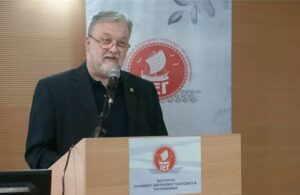
With his presentation “Tradition in Modern Catering – How Mass Catering Integrates Traditional Ingredients into Modern Menus”, the President of the IEG, George Kavvathas, discussed the integration of traditional ingredients into modern mass catering and how we take a product or a traditional flavor and pass it from the family table to modern consumption, without losing its identity, so as to evolve tradition without altering it. The presentation by Professor of the University of West Attica, George Zakynthinos, on the topic: “PDO and PGI Standards: Protecting Identity – The Legal, Economic and Commercial Importance of Certification”, highlighted another crucial dimension, that identity needs protection. A product must not only be good. It also needs to be recognizable, accredited and protected. Certification - accreditation can function as a tool for protecting local identity, but also as a tool for economic and commercial exploitation. However, certification - accreditation, in order to be able to create added value, needs to have an entire story built around it, because gastronomy does not stop at the product. This was summarized by the Special Advisor for Strategy & Communication and Vice President of the IEG. Nikolaos Michalitsis in his presentation on the topic: “From the field to the table and from the table to the world. Gastronomy as an ambassador of the identity and tourism brand of Greek places”. The great opportunity begins when we move from the product to the recipe, from the recipe to the history, from the history to the experience and from the experience to the place. Then, gastronomy ceases to be just a consumer product and becomes an element of identity of a destination, which can contribute to the creation of a strong tourism brand.
And because ultimately, all of this must be able to travel, the case study of the company TRIKALINOS S.A., presented by the company's Export and Marketing Director Lila Kourti, in her presentation on the topic: "Case study Trikalinos Roe: The promotion of our gastronomic culture through the international development of a traditional food" was extremely useful, because it shows us that a traditional product can overcome its geographical boundaries, acquire a modern identity, create added value and become internationally recognizable. Therefore, tradition is not opposed to extroversion, but can become its basis. In conclusion, an entire path was highlighted that starts from the product, passes through science, tradition, certification, modern experience, with an identity in tourism and with branded products in the international market. At the I.E.G. Gastronomy is not treated only as nutrition, as tradition, as production, as catering, as tourism or as trade. It is all of these together and that is precisely where its strategic value lies.
The event was held under the auspices of the Ministry of Agriculture, Rural Development and Food, the General Confederation of Professional Craftsmen and Traders of Greece (G.S.E.B.E.E.), the Panhellenic Federation of Restaurant & Related Professionals (P.O.E.S.E.), the "HELLA-DIKA MAS" Initiative, the Federation of Professional Craftsmen and Confectioners of Greece (O.E.Z.E.), the Federation of Bakers of Greece (O.A.E.), the Panhellenic Union of Food Technologists and Scientists (P.E.T.E.T.) and the Friends of Olive Oil & Table Olives Club (FILAIOS).