
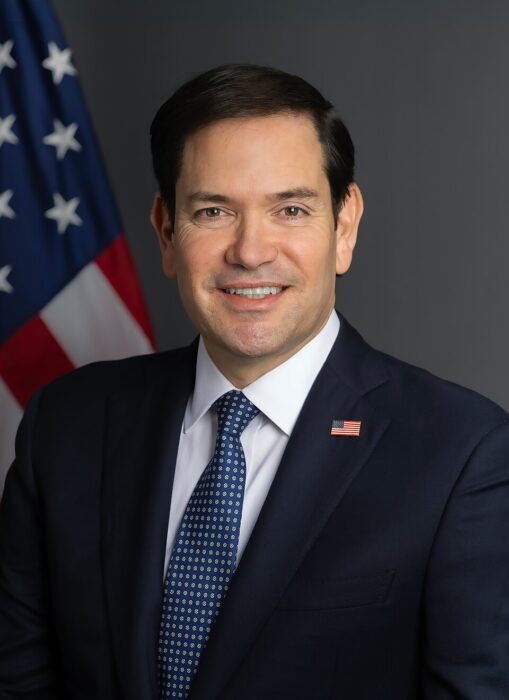
Marco Rubio’s speech at the Pnyx lends itself to a deeper reading than admiration for ancient Greece. The country is presented both as the historical starting point of the West and as a modern example of allied behavior. This connection is its essential political content. The recognition of the Greek past is accompanied by expectations for the Greek future: productive contribution, strategic credibility, and participation in the reconstruction of Western power. The praises acquire significance when we consider what choices they encourage.
The first, less visible message concerns the actual audience. Rubio spoke to Greece, but he addressed Europe more broadly. When he described the country as a model ally and expressed the hope that other Europeans would follow its example, he used the Greek case as a yardstick for comparison. Athens thus acquires symbolic influence within the transatlantic debate. At the same time, public reward creates an expectation of continuity: the exemplary ally is called upon to maintain its contribution when the costs increase.
The choice of the Pnyx reinforces this function. The historical staging allows American politics to be presented as a continuation of a common cultural path. It is a political exploitation of history, with a selective emphasis on excellence, competition, courage, and the willingness to defend the community. This interpretation can mobilize, without exhausting the complexity of the Greek heritage. For Greece, accepting the honor does not require adopting every ideological conclusion of the speaker.
The second message lies in the connection between culture and production. Rubio moves from ancient creativity to reindustrialization, microprocessors, minerals, and technological superiority. The transition reveals his practical reasoning: a civilization maintains its autonomy when it can produce the means of its security and prosperity. For Greece, this translates into a need to expand the productive base and exploit scientific knowledge. Historical prestige needs modern economic support.
Here, too, a change in the way competitiveness is assessed appears. When the control of critical supply chains becomes a priority, low purchase cost ceases to be the only criterion. Supplier reliability, transport security and the ability to continue operating in a crisis are taken into account. This can favor Greek facilities within European and allied networks. The opportunity, however, remains conditional: high energy costs, delays and skills shortages can cancel out the geopolitical advantage. Greater security may initially cost more, because it requires reserves and additional investments; its benefit is revealed when production interruptions, shortages and sharp price increases for consumers are prevented.
The third message concerns the nature of infrastructure. In the logic described in the speech, a port, a shipyard or an energy terminal acquires importance beyond the company's balance sheet. It can increase an alliance's options and reduce dependencies. The accompanying text on Greece as a gateway to the West illuminates precisely this dimension. Greek geography acquires greater value when its infrastructures function complementary and remain available under pressure.
Eleusis offers a concrete example. The American development finance agency DFC explicitly links support for shipyards to limiting Chinese influence in the region. Therefore, financing a productive project also serves a strategic purpose. This helps to read the speech as a political explanation of an already formed direction. It does not, however, document some undeclared agreement to overthrow the regime in Piraeus. The distinction between confirmed policy and speculation is necessary.
This presents a more difficult Greek choice. Economic cooperation with a great power may create reservations in another strategic partner. Athens therefore needs diversification of investors, transparent rules and effective control of critical infrastructure. The solution does not arise from generalized labels for the nationality of each investment. It arises from an assessment of specific dependencies, access rights and alternative possibilities. Allied membership limits some room for maneuver, but it can also offer more financing and technology options.
The fourth message concerns national sovereignty. Rubio argues that alliances exist to defend it. This position allows Greece to claim reciprocity in the same language that Washington uses. Since each state is entitled to serve its interests, the Greek government must negotiate the terms of its contribution. Allied credibility goes hand in hand with demands for know-how, productive participation, and substantial support for the country’s security.
The flip side of this principle is equally important. Recognizing Greece as a valued ally does not imply an alignment of American and Greek interests on every issue. Speech does not establish new guarantees or resolve differences in the Eastern Mediterranean. Historical familiarity may strengthen the political relationship, but practical support depends on concrete agreements, institutional commitments, and connections. Greece needs to measure progress by these criteria, not by the intensity of praise.
The fifth message is in the discussion of deterrence. Rubio links power to the credibility of the will to use it when diplomacy fails. For Greece, the relevant reading concerns readiness, maintenance, inventories and consistent strategic communication. Equipment purchases are part of this effort. Equally critical is the ability to sustain it for a long time. Domestic industry thus acquires both economic and operational importance.
Another dimension concerns the distribution of burdens within the West. The praise for Greece is part of the approval of increased European defense spending and production. The country can acquire a greater role, but also assume more obligations. Here, careful calculation is needed: which projects serve both Greek and allied needs, who finances them and who assumes the cost of their protection. Strategic upgrading has real value when it remains economically and socially sustainable.
The role of the gateway also involves exposure to risks. More important infrastructures can attract cyberattacks, espionage or political pressure. At the same time, their security depends on day-to-day operations that rarely appear in official speeches: reliable power supply, staffing, backup systems and recovery plans. A meaningful Greek response requires investment in the resilience of the entire network. Geographical location alone does not protect a port or the businesses that depend on it.
Less obvious is also the relationship between cultural identity and the country's European position. Greece can draw self-confidence from historical recognition, maintaining its autonomy in the face of ideological disputes between allies. Membership in the European Union offers institutions, a market and opportunities for joint action. A strong relationship with the US adds different possibilities. It is in the Greek interest to strengthen the complementarity of the two relations, with an orientation towards specific results.
The decisive test ultimately lies within the economy. If strategic utility primarily increases transit, while technology and profits are concentrated elsewhere, the developmental benefit will remain limited. Greek suppliers, university-business partnerships, skilled labor, and access for smaller companies to projects are needed. These are not automatic outcomes of good diplomatic relations. They require national planning, investment evaluation, and negotiation before the terms of the partnerships are solidified.
A deeper reading of the speech therefore leads to a demanding proposition for Greece. The country is called upon to demonstrate that its historical importance is accompanied by a modern capacity for production, protection and organization. The political opportunity is to transform allied usefulness into greater decision-making autonomy. This presupposes its own priorities and measurable returns. Success will be seen when the upgrading of its position on the map also improves the position of its citizens in the real economy.
Photo From US Department of State – https://www.flickr.com/photos/statephotos/54295399868/, Public Domain, https://commons.wikimedia.org/w/index.php?curid=158753615, https://el.wikipedia.org/wiki/